

- Writes and expands your end-to-end tests
- Maintains tests as your app evolves
- Runs tests in parallel across our infrastructure
- Investigates failures and fixes test issues
- Provides clear artifacts like videos, logs, and traces for every run
Needed to get started
Integrations- Connect a messaging app (Slack, MS Teams, Discord).
- Provide test environment credentials.
- Share any existing test plans or internal priority lists.
- Share any existing E2E tests you may be running.
- Prepare environments for QA Wolf
- Assign a champion point of contact to remove blockers
Onboarding timeline
These are rough timelines from the contract start date.1
Kick-off (by day 5)
Agenda
Meet your dedicated team, review coverage goals, and align on milestones and timelines.Goals
Meet your dedicated team, review coverage goals, and align on milestones and timelines.Goals
- Connect a shared Slack, Teams, or Discord channel.
- Get access to a testing environment.
- Learn about coverage goals and priorities.
| Your team | Our team |
|---|---|
| Point of contact during the sales process | Customer Success Manager |
| Day-to-day champion | QA Lead |
| Engineers, PMs, and members of your QA team you want involved |
2
Product tour (by day 5)
Agenda
You’ll walk our team through your app and point out critical priorities or anything to avoid.Goals
You’ll walk our team through your app and point out critical priorities or anything to avoid.Goals
- Learn how your product works and how features are related.
- Discuss any “gotchas” that affect how tests need to run.
- Prioritize tests to build first.
| Your team | Our team |
|---|---|
| PM or engineering lead familiar with what needs testing | QA Lead |
| Test outliner |
3
First test plan review (by day 15)
Agenda
The initial test plan is a high-level view of what flows we recommend testing. After you approve we’ll outline specific test steps and assertions.Goals
The initial test plan is a high-level view of what flows we recommend testing. After you approve we’ll outline specific test steps and assertions.Goals
- Review the high-level flows.
- Add, revise, or replace any flows you think are necessary.
- Re-confirm priorities and get approval to begin outlining.
| Your team | Our team |
|---|---|
| PM or engineering lead | QA Lead |
| Test outliner |
4
Final test plan review (by day 20)
Agenda
The final test plan outlines the specific test steps and assertions in the Arrange-Act-Assert (AAA) format.Goals
The final test plan outlines the specific test steps and assertions in the Arrange-Act-Assert (AAA) format.Goals
- Review AAA outlines and make any necessary adjustments.
- Get approval to begin automating your tests.
| Your team | Our team |
|---|---|
| PM or engineering lead | QA Lead |
| Test outliner |
5
Test automation
We find this order works best for most teams:
- Your highest priority flows.
- Most complex flows that take longest to build and stabilize.
- Simplest flows.
FAQ
Who will we be working with from QA Wolf?
Every customer gets a dedicated team of Wolves to make sure that they’re successful:- Customer Success Manager — Strategic owner of the partnership, keeping us aligned on your goals.
- QA Lead — Primary point of contact for technical implementation, including your test plan and testing of new features.
- QA Team — Implements tests, investigates failures, maintains tests, and reports bugs.
- Account Executive — Guides you through contracting, security reviews, and any other internal procedures your company requires.
In what order does QA Wolf build tests?
Unless there are specific high-priority tests that need to be done first, we generally start with the most complex flows. These take longer to build and often require more collaboration with your team, so tackling them early helps speed up the rest of the process. Test creation isn’t linear — we don’t build one test after another in sequence. Because we focus on the hardest flows first, your suite will come together unevenly at first and then accelerate as simpler tests are added.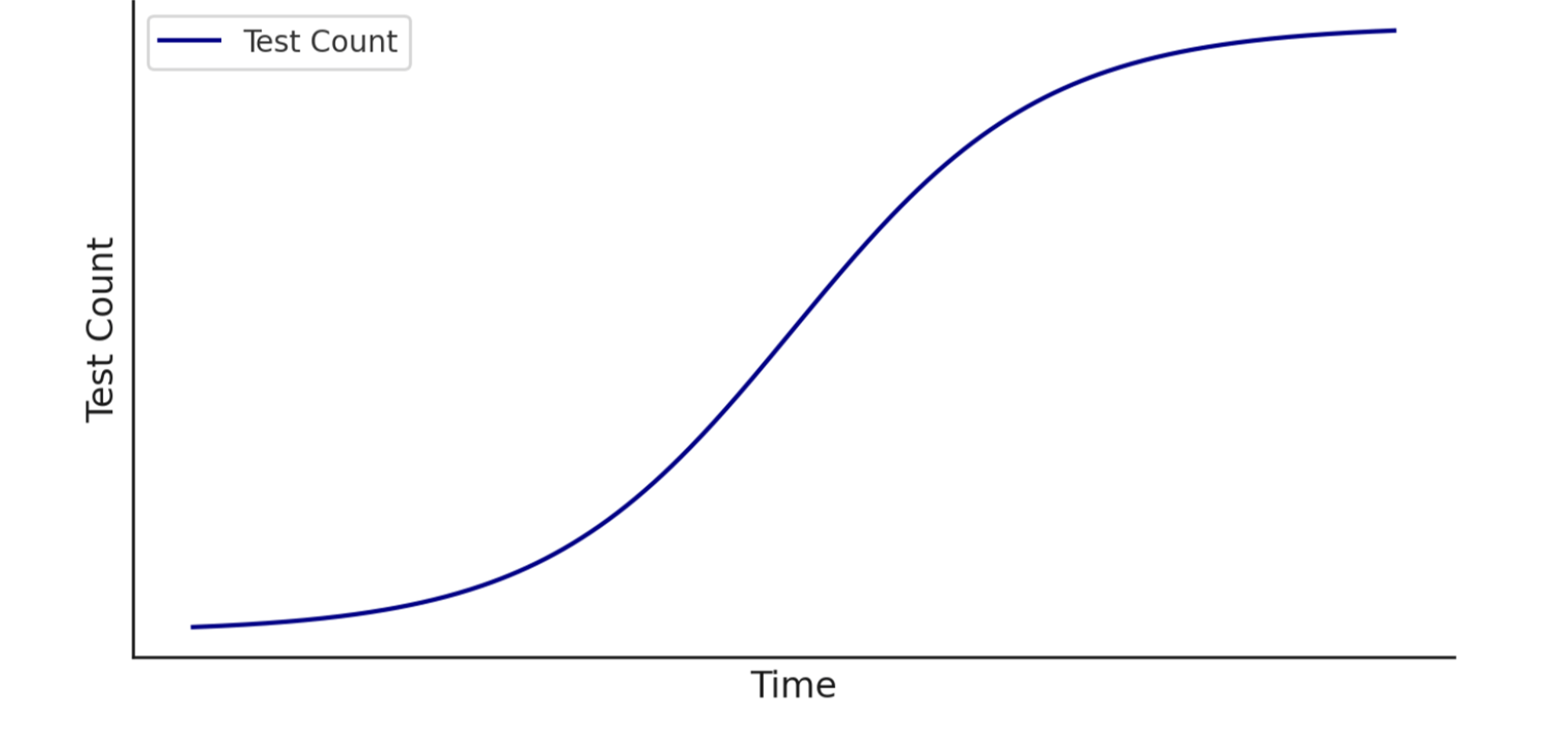
When will our tests start running?
Tests start running as soon as they’re built, beginning with your most business-critical flows. To keep things moving:- Make sure your team is available for the Product tour meeting.
- Approve the coverage outline as soon as it’s ready.