> ## Documentation Index
> Fetch the complete documentation index at: https://docs.qawolf.com/llms.txt
> Use this file to discover all available pages before exploring further.
# How to integrate with GitLab
> Connect QA Wolf to GitLab CI/CD to automatically trigger test runs when you deploy code from your repository.
If your repositories are hosted on GitLab.com or on a GitLab Enterprise Server instance with internet access, this is the recommended setup. The integration connects directly to your QA Wolf environments.
If your GitLab instance does not allow outbound HTTPS connections (for example, an air-gapped GitLab Enterprise installation), use the QA Wolf CI SDK instead.
Make sure you have:
* Admin or Maintainer access to the GitLab project.
* Access to your QA Wolf workspace.
* At least one QA Wolf environment already configured.
* A QA Wolf API key.
## Enable the GitLab integration in QA Wolf
Open the `Workspace name` dropdown in QA Wolf and click **Workspace Settings**.
Click **Integrations**, then click **Enable** next to **GitLab**. This opens GitLab, where you'll be prompted to sign in if you have not already done so. Follow the prompts to connect your GitLab account or group.
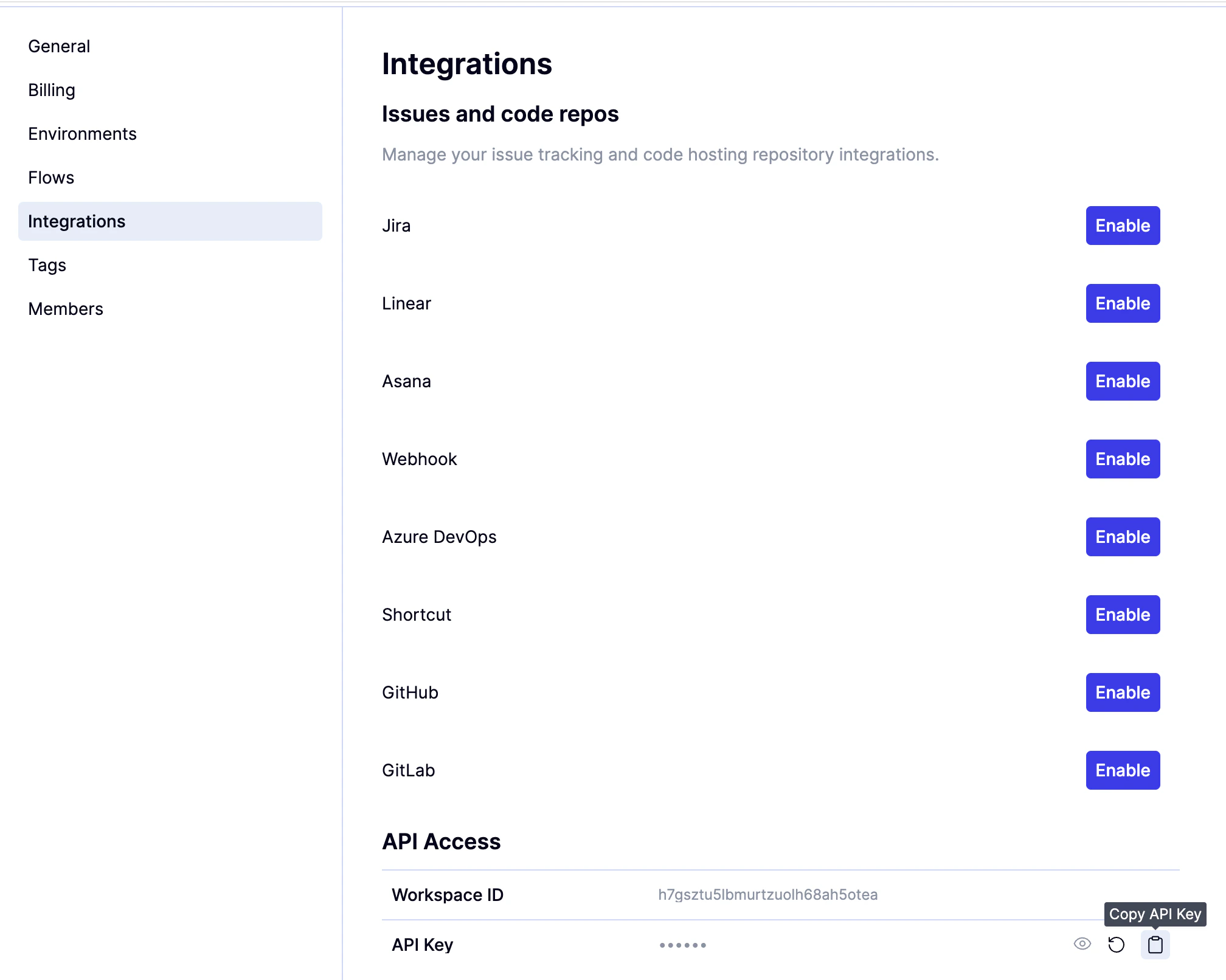 You'll be asked to provide a **Group Access Token** with the **Maintainer** role and **API** scope.
The Maintainer role is required because Developer tokens cannot create pipeline checks on protected branches.
Once connected, QA Wolf can set commit statuses and link test runs to GitLab commits.
### Find the QAWOLF\_API\_KEY
Open the `Workspace name` dropdown in QA Wolf and click **Workspace Settings**.
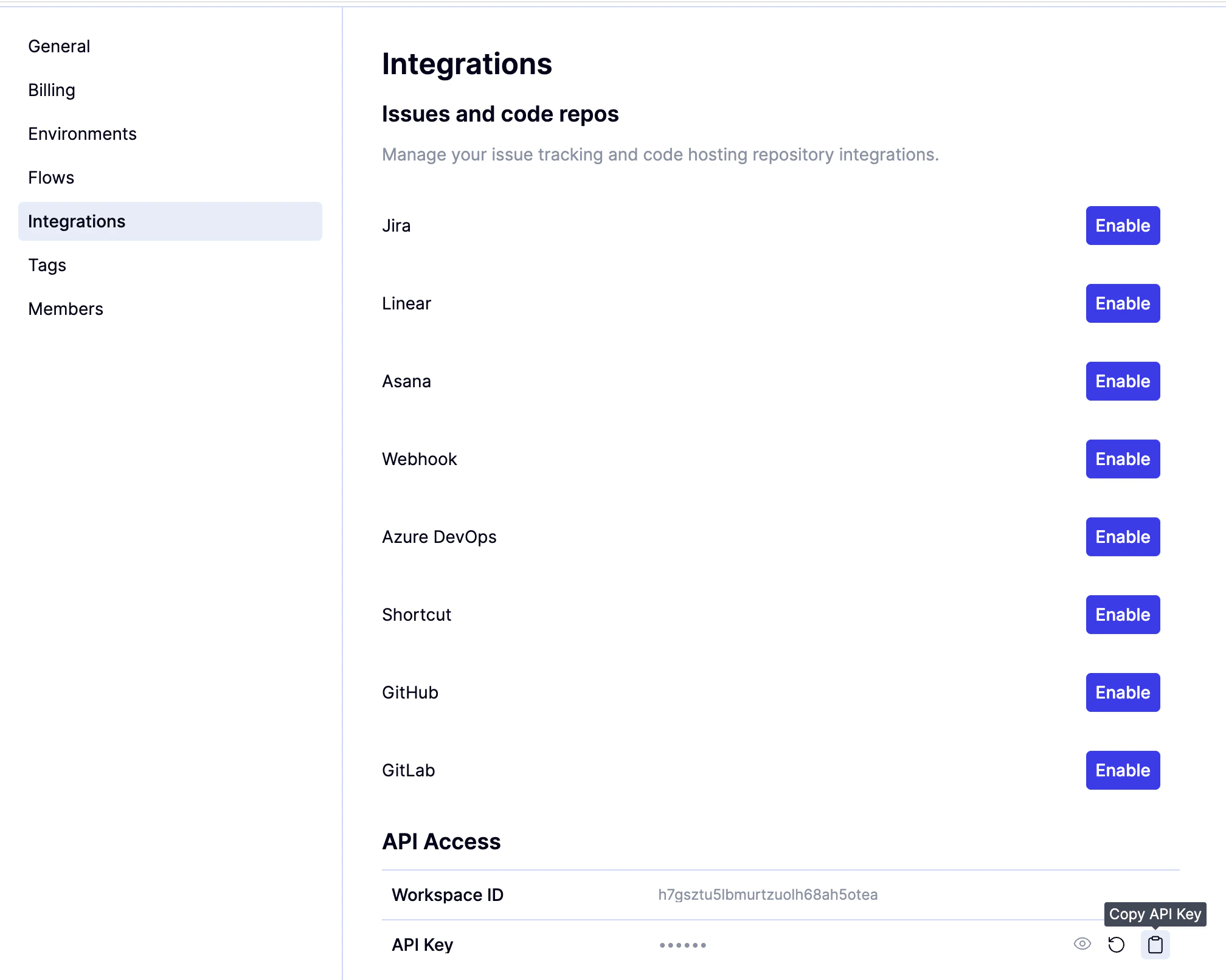
Choose **Integrations** and then click the icon to the right of **API Key** under **API Access**.
You'll be asked to provide a **Group Access Token** with the **Maintainer** role and **API** scope.
The Maintainer role is required because Developer tokens cannot create pipeline checks on protected branches.
Once connected, QA Wolf can set commit statuses and link test runs to GitLab commits.
### Find the QAWOLF\_API\_KEY
Open the `Workspace name` dropdown in QA Wolf and click **Workspace Settings**.
Choose **Integrations** and then click the icon to the right of **API Key** under **API Access**.
 ### Add the QAWOLF\_API\_KEY secret
Open your GitLab project.
Go to **Settings → CI/CD → Variables**.
Click **Add variable**.
Name the variable `QAWOLF_API_KEY`, paste your API key, and save.
You can also define additional variables, such as a deployment URL, if your pipeline uses them.
## Add the deploy notification to GitLab CI/CD
QA Wolf provides a public API endpoint that your GitLab pipeline can call upon successful deployment. Add a job to your `.gitlab-ci.yml` that runs after your deploy step completes successfully.
```yml expandable theme={null}
stages:
- build
- deploy
- notify
deploy:
stage: deploy
script:
- ./deploy.sh
environment:
name: staging
notify_qawolf:
stage: notify
script:
- |
curl -X POST "https://app.qawolf.com/api/webhooks/deploy_success" \
-H "Authorization: Bearer $QAWOLF_API_KEY" \
-H "Content-Type: application/json" \
-d "{
\"branch\": \"$CI_COMMIT_REF_NAME\",
\"deployment_type\": \"staging\",
\"deployment_url\": \"$QA_WOLF_DEPLOY_URL\",
\"sha\": \"$CI_COMMIT_SHA\",
\"hosting_service\": \"GitLab\"
}"
when: on_success
needs: ["deploy"]
```
This job tells QA Wolf that a new deployment is ready for testing.
Run your GitLab CI/CD pipeline to trigger a deployment.
Wait for the pipeline to complete successfully.
Open QA Wolf and confirm a new run appears under the expected environment.
## Verify the integration
Push a new commit to your main branch and wait for your deployment to complete.
Open QA Wolf and confirm a new run appears under the expected environment.
## Related
* [webhooks/deploy\_success](/qawolf/deploy-success)
* [REST API](/qawolf/rest-overview)
### Add the QAWOLF\_API\_KEY secret
Open your GitLab project.
Go to **Settings → CI/CD → Variables**.
Click **Add variable**.
Name the variable `QAWOLF_API_KEY`, paste your API key, and save.
You can also define additional variables, such as a deployment URL, if your pipeline uses them.
## Add the deploy notification to GitLab CI/CD
QA Wolf provides a public API endpoint that your GitLab pipeline can call upon successful deployment. Add a job to your `.gitlab-ci.yml` that runs after your deploy step completes successfully.
```yml expandable theme={null}
stages:
- build
- deploy
- notify
deploy:
stage: deploy
script:
- ./deploy.sh
environment:
name: staging
notify_qawolf:
stage: notify
script:
- |
curl -X POST "https://app.qawolf.com/api/webhooks/deploy_success" \
-H "Authorization: Bearer $QAWOLF_API_KEY" \
-H "Content-Type: application/json" \
-d "{
\"branch\": \"$CI_COMMIT_REF_NAME\",
\"deployment_type\": \"staging\",
\"deployment_url\": \"$QA_WOLF_DEPLOY_URL\",
\"sha\": \"$CI_COMMIT_SHA\",
\"hosting_service\": \"GitLab\"
}"
when: on_success
needs: ["deploy"]
```
This job tells QA Wolf that a new deployment is ready for testing.
Run your GitLab CI/CD pipeline to trigger a deployment.
Wait for the pipeline to complete successfully.
Open QA Wolf and confirm a new run appears under the expected environment.
## Verify the integration
Push a new commit to your main branch and wait for your deployment to complete.
Open QA Wolf and confirm a new run appears under the expected environment.
## Related
* [webhooks/deploy\_success](/qawolf/deploy-success)
* [REST API](/qawolf/rest-overview)